
15 Questions to Ask After a Winter Snow Event
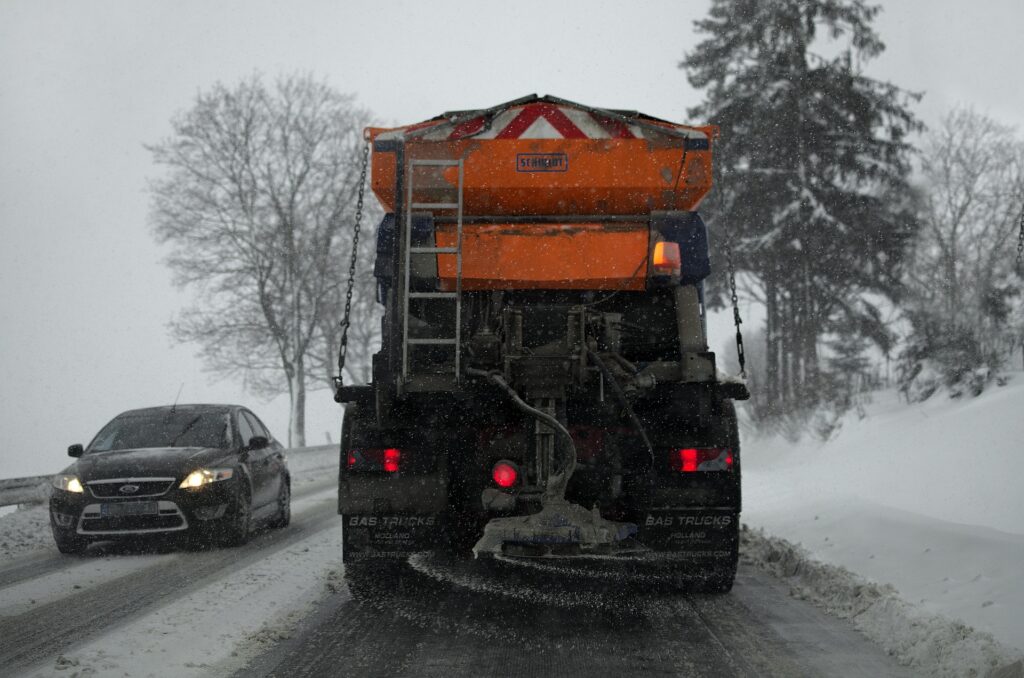
Every member of a public works or roads department wants to ensure that they are keeping the roads clear during and after a winter snow event. Their friends and family are driving on the roads that they are plowing and treating with de-icing and anti-icing products.
According to NOAA’s National Severe Storms Laboratory, most winter storms start high up in the clouds, where it’s cold enough for snow to form. Up there, tiny ice crystals stick together to create snowflakes, which then drift down toward the ground. If the air stays at or below freezing (0°C or 32°F) all the way down, those flakes make it to the surface as snow instead of melting into rain.
Different Types of Snow = Different Responses
As any seasoned snowfighter knows, there are different types of snow:
- Flurries: Light snow that falls for a short time—just enough to leave a light dusting, if anything at all. While this is probably a heads up for most departments, you’re not warming up the snowplows yet.
- Snow Showers: Snow that comes and goes in bursts. It can vary in intensity, and you might see some accumulation. With snow showers, most departments will be on alert, monitoring the storm’s path and behavior.
- Snow Squalls: Quick, heavy bursts of snow with strong, gusty winds. Visibility can drop fast, and snow can pile up in no time. When these start most teams have their thermos filled and thermals on – ready to keep their community safe.
- Blowing Snow: When the wind picks up loose snow from the ground—or mixes it with falling snow—it can swirl through the air, making it hard to see and creating drifts. The drifts are now the target of crews as they are executing their response plans.
- Blizzard: The big one—strong winds over 35 mph, lots of blowing snow, and visibility reduced to less than a quarter mile for at least three hours. When the blizzards come, crews know it will be a long day – maybe even into the night.

Questions to Ask After a Winter Snow Event
To provide the best response possible, here are a few questions for discussion as your team reviews your department’s performance after a winter storm.
- Did we clear the primary/major roads within a reasonable timeframe?
- Were the main thoroughfares through town (interstate, state, and main streets) cleared in preparation for morning traffic?
- Did the transit and school bus routes get cleared in time for the buses to run?
- Were the major trucking routes addressed as a priority and round the clock?
- Did the routes to major industrial areas and mail delivery routes get cleared in a reasonable time?
- Did the routes to the local hospitals and fire stations receive priority clearance?
- Did we get to the secondary roads within a reasonable timeframe?
- Were any areas missed? Were they missed repeatedly or just during severe storms?
- How does the accident rate for this winter snow event compare to the previous 5 years?
- Has the average daily traffic (ADT) increased, decreased or stayed the same?
- Were the stopping points (traffic signals, stop signs, railroad crossing, and other intersections) treated with extra care? (more Ice Slicer, another pass with the plow, etc.)
- Do the treated areas overlap to prevent unexpected slick areas?
- Were ramps and other approaches to major city routes treated early in the storm?
- Were all potential hazards that would be covered in snow clearly marked such as drop inlets, catch basins, ends of curbing, guardrails, fire hydrants and drain locations?
- Was the snow fencing placed properly? Should there be any adjustments between storms?
Snow/Ice Event Report
We’ve created a Snow/Ice Event Report that you can use to gather the data after each storm – you can download it here. These questions are just the start of evaluating a department’s response after a winter snow event. What would you add to this list? Please share in the comments.
Are you reviewing the products you currently use? Would you like to talk to an Ice Melts expert? Contact your sales representative today or call (877) 718-3878 for more information.
Desert Mountain Corporation – Keeping Roads Safe Since 1990
