
Dust Control for Equipment Yards: Why Unpaved Areas Need a Plan
Unpaved equipment yards are simply part of the operation for many businesses. Trucks come and go, loaders and heavy equipment move throughout the property, crews load and unload materials, and employees travel between work areas.
All that activity can create a lot of dust.
Dust control for equipment yards is about more than keeping trucks and buildings clean. Managing fugitive dust can help improve visibility, maintain the unpaved surface, decrease water use, and reduce the dust that might be going into residental areas nearby.
A regular dust control program can create better working conditions throughout the yard. For busy industrial and commercial operations, controlling dust before it becomes a problem can also make routine yard maintenance easier.
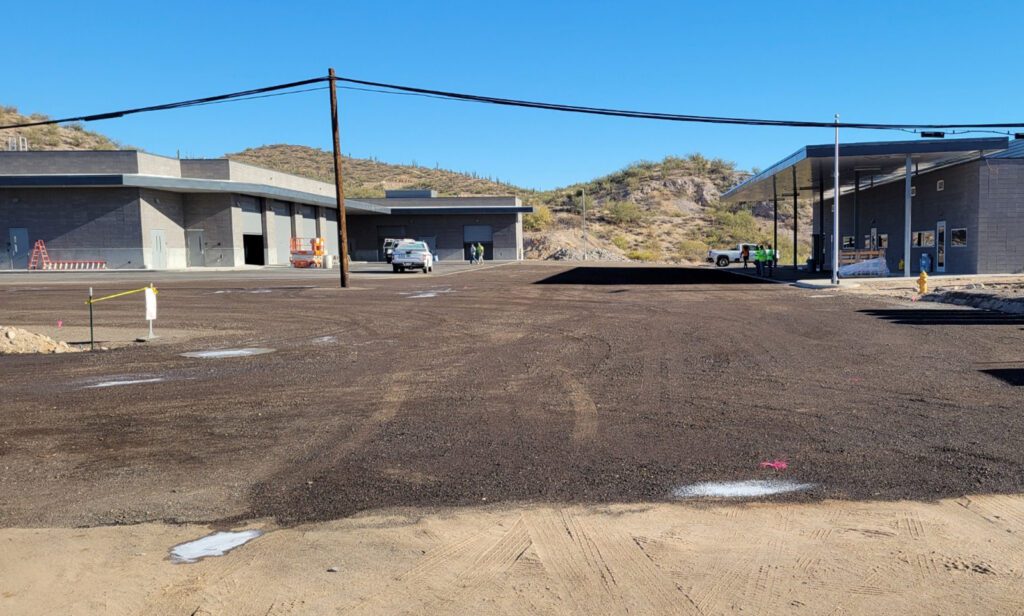
Why Do Unpaved Equipment Yards Get So Dusty?
Every time a truck or piece of heavy equipment travels across an unpaved surface, tires disturb the fine particles in the soil and aggregate. As traffic increases, those fines can become loose and airborne. Generally, if the vehicle is going faster than recommended.
Conditions can become even dustier when you combine any of the following:
- Heavy or continuous vehicle traffic
- Frequent turning, braking and acceleration
- Loading and unloading activities
- Wind
- Dry weather
- Loose or poorly graded aggregate
- Large, exposed areas
The problem can build over time. Traffic and equipment movement can dislodge fine surface material, leaving larger aggregate loose and creating additional maintenance issues. Therefore, you may need to blade and water your yard more frequently than normal.
Dust Can Reduce Visibility Around Heavy Equipment
For this reason, visibility is critical in busy equipment yards where employees, trucks, and heavy machinery may all be working in the same area at the same time.
Any traffic on dry, untreated surfaces can produce dust clouds behind the vehicle. Depending on conditions, that dust can make it harder to see other equipment, employees, signs, intersections or obstacles. Visitors may not know the yard’s traffic patterns, typical travel speeds, or how to navigate safely around moving equipment. Reducing the amount of dust that becomes airborne helps maintain better visibility throughout the yard.
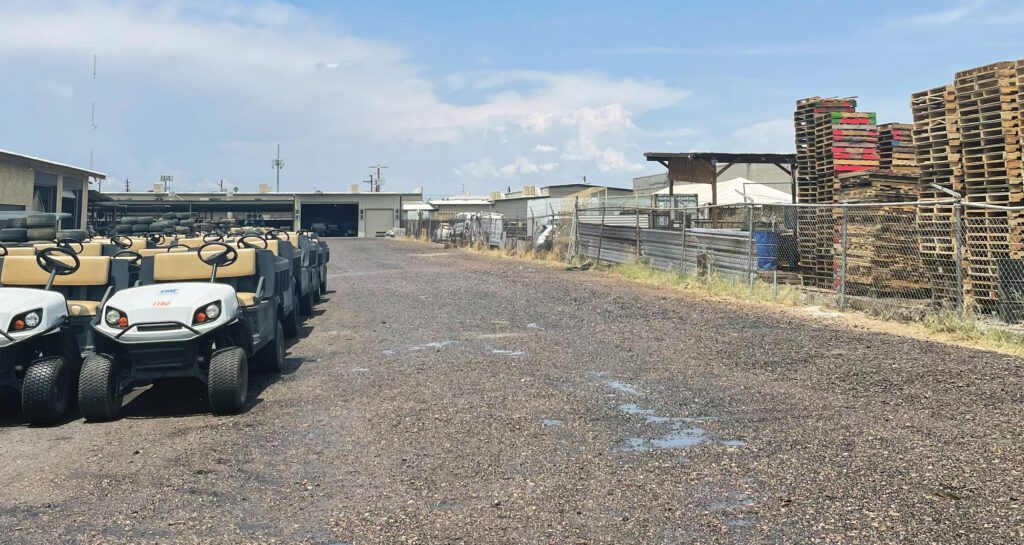
Keeping the Fines Where They Belong
Dust blowing through the air is also material leaving the surface.
In fact, the fines in aggregate play an important role in an unpaved surface. As a result, when those particles are continually displaced by traffic and wind, the surface can begin to deteriorate.
That can contribute to conditions like:
- Loose aggregate
- Potholes
- Washboarding
- Ruts
- Uneven driving surfaces
- Increased grading and maintenance
Putting a dust control program in place will help keep those fine particles in place. Depending on the product and application method, many solutions for dust control can help bind fines to larger aggregate subsequently improving the overall stability of the yard, parking lot, and driving routes.
Less Dust Can Mean Less Cleanup
Anyone who has worked around any untreated dirt lot or road knows dust doesn’t stay in the equipment yard or parking lot.
It will settle on parked vehicles, equipment, buildings, outdoor storage areas, and anything else nearby. In addition, wind can carry fugitive dust outside the equipment yard and onto neighboring properties.
As a result, controlling dust reduces the amount of material crews need to clean up later.
More importantly, for equipment yards located near other businesses, neighborhoods, or public roads, controlling blowing dust can help minimize the operation’s impact beyond the property line. For example, high winds can carry dust well beyond the yard and affect surrounding areas.
What About Water Trucks?
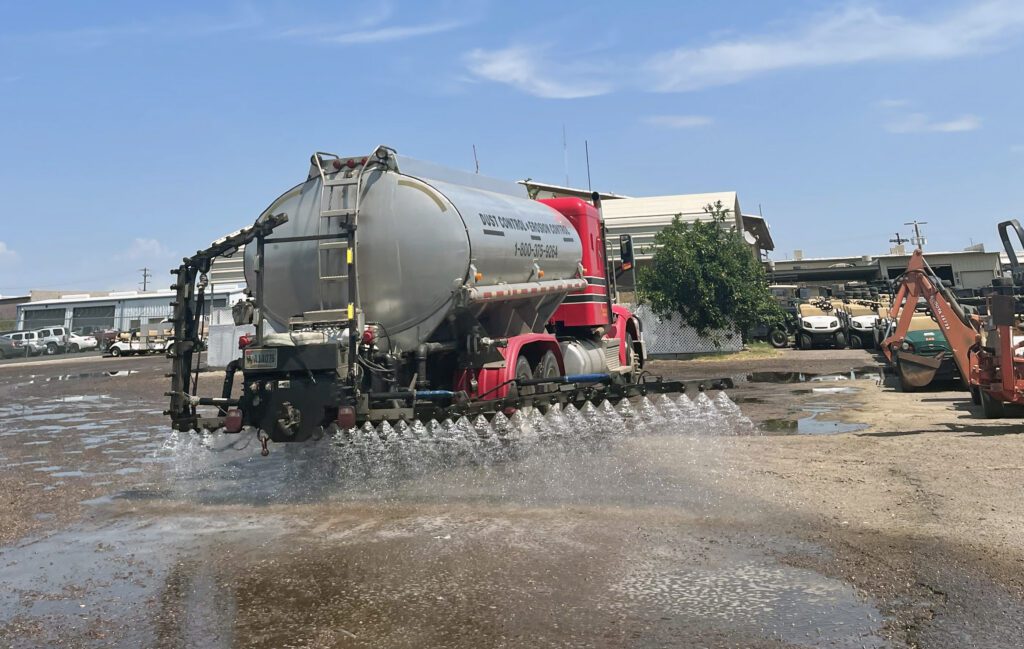
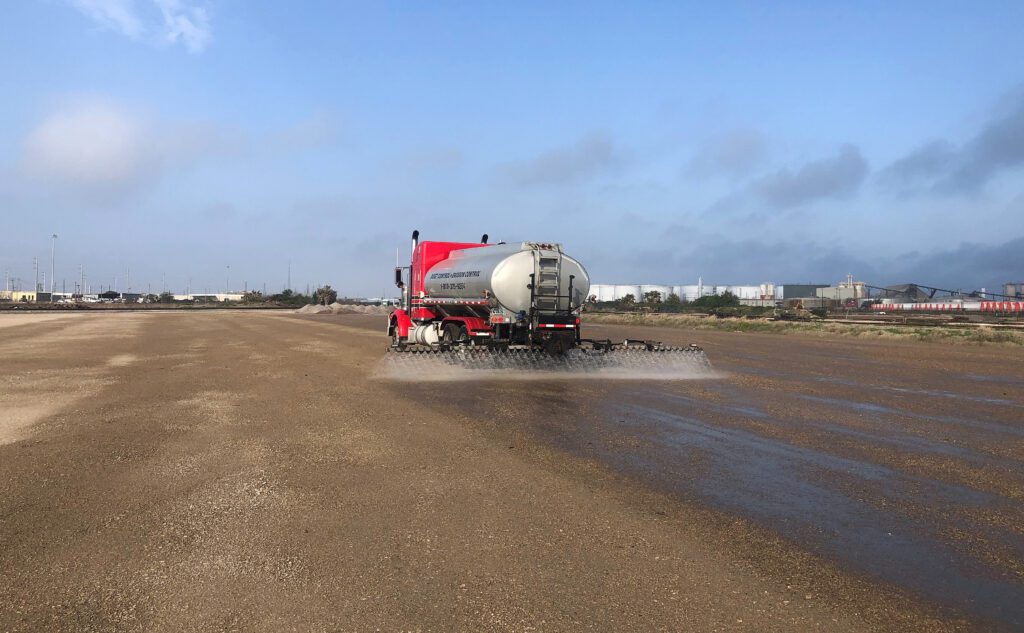
Applying water to unpaved surfaces helps control dust and provides an effective short-term dust palliative.
The challenge is that water evaporates.
The yard may need to be watered repeatedly throughout the day to keep dust under control—especially during hot, dry, or windy weather. As a result, you use more water, more truck time, more fuel, and more employee hours to operate the water truck.
In addition, regularly watering the same areas in large equipment yards can lead to aggregate loss through runoff. For this reason, consider using a longer-lasting dust suppressant.
Some dust control products are designed to retain moisture or bind fine particles together, extending the time between applications and reducing dependence on repeated watering. And there is a build up of product with subsequent treatments that actually leads to using less product with future applications – saving money in the long run.
Keep in mind that water shortages can occur as well. When water supplies run low, suppliers may substantially increase prices or ration available water. Companies with an established dust control program can better prepare for these conditions.
Not Every Part of the Yard Needs the Same Treatment
An effective equipment yard dust control plan doesn’t necessarily mean treating every square foot of the property the same way. Start by looking at where the majority of the dust comes from.
High-priority treatment areas may include:
- Entrances and exits
- Main driving routes
- Loading and unloading areas
- Equipment staging areas
- High-traffic intersections
- Employee parking
- Material storage areas
Equally important, analyzing traffic patterns can help determine where additional soil stabilization may provide the greatest benefit. As a result, an operation can focus on areas with the most traffic or dust and develop a more practical maintenance plan.
Often dust control product applications can include another pass over where the most traffic is and where the most dust comes from.
Surface Preparation Makes a Difference
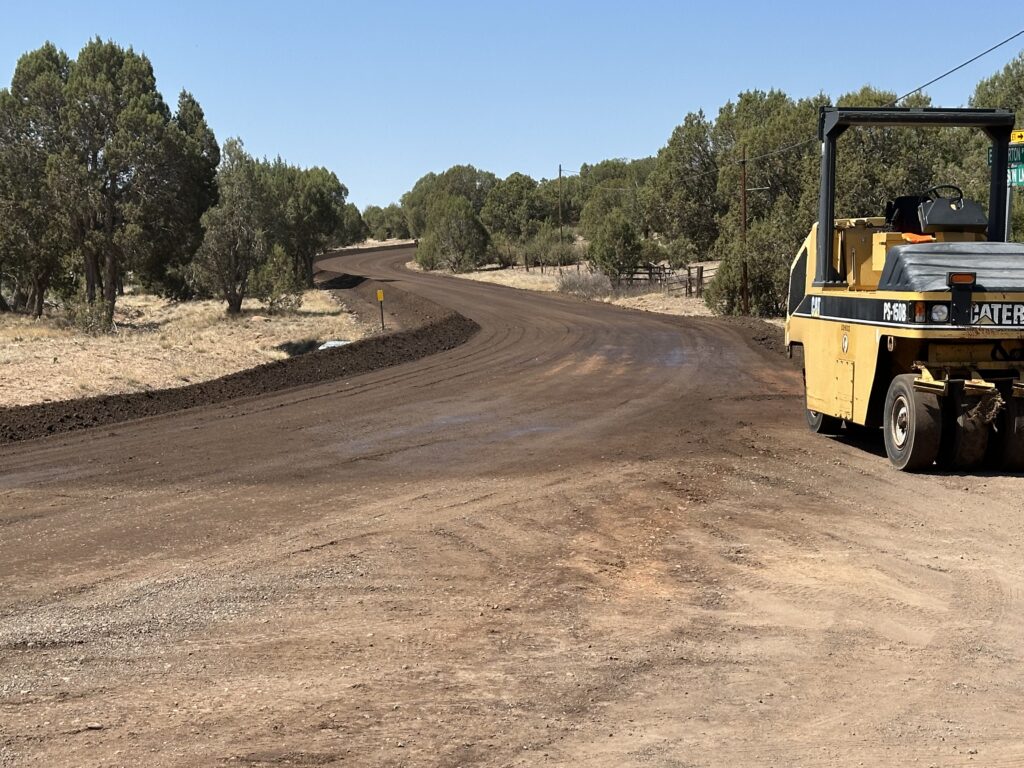
In order to make the most of the investment in dust control, proper surface preparation is key to its success.
Before an application, the yard should be graded to repair potholes, ruts and washboarding. More aggregate may need to be brought in to help level the yard out. This is also the perfect time to check on the compaction, aggregate composition, and drainage.
The condition of the surface before treatment can have a major impact on how well a dust control application performs and how long it lasts. It is recommended that the morning of the application, a water truck apply a light coat of water. This will help the dust control product absorb deeper into the soil and last longer.
Desert Mountain emphasizes these same fundamentals in its application guidance: aggregate quality, moisture, compaction, site preparation and application rate all work together to achieve better results.
Choosing the Right Dust Control Solution
There isn’t one dust control product that’s right for every equipment yard.
Soil type, aggregate, traffic, weather, environmental considerations and the way the property is used should all be evaluated before selecting a product.
Magnesium chloride products, for example, are hygroscopic, meaning they attract moisture from the air and resist evaporation. Other dust suppressants work by binding fine particles to larger aggregate. These are more effective in drier climates with fine soil particles.
Desert Mountain Corporation offers several types of dust control and soil stabilization products for unpaved surfaces. Dust-Loc™ is a high-purity magnesium chloride solution designed to attract moisture and bind fine dust and aggregate. It is most successful in climates with more precipitation. Road-Loc® uses lignin sulfonate from the tree pulping industry to bind fines and improve surface durability. It makes a big difference in drier climates with soil that is very fine. And DMC Custom Blend is often recommended as it combines the best features of both Dust-Loc™ and Road-Loc®.
The right solution depends on the yard—not simply the product.
Make Dust Control Part of Routine Yard Maintenance
Dust control works best when it is treated as part of an overall maintenance program rather than something that only gets attention when the dust becomes excessive.
Regularly assess the unpaved surfaces. Watch traffic patterns. Repair potholes and drainage problems. Maintain proper aggregate. Identify the areas producing the most dust and determine whether watering, a dust suppressant or a more comprehensive stabilization treatment makes sense.
A well-maintained unpaved equipment yard can mean less airborne dust, better visibility, reduced loss of aggregate, and fewer hours spent watering and maintaining the surface. With consistent applications, the products will build up in the soil and provide better soil stabilization and dust control with each application.
For an operation where trucks and equipment are moving every day, those improvements can add up.
Need Help Evaluating an Unpaved Equipment Yard?
Since 1990, Desert Mountain Corporation has provided dust control, road stabilization, soil stabilization, and erosion control solutions for:
- Industrial equipment and other storage yards
- Manufacturing facilities
- Federal, state, tribal, county, and municipal operations
- Forestry control roads
- Solar, wind and other renewable energy sites
- Other high-traffic unpaved surfaces
Our team can evaluate your site’s soil, aggregate, traffic and operating conditions and help determine an appropriate dust control approach.
Call 877-718-3878 or visit Desert Mountain Corporation’s Dust Control Solutions to learn more.
Keeping Roads Safe Since 1990™
